Friday, 30 May 2014

10 Things You Can Do to Lose Weight

If you’re like most people, you might have trouble controlling your weight. Or may be it’s under control, but it won’t go down to where you’d like it to be.

Weight loss, however, doesn’t have to be stressful or complicated. A few simple habit changes could make a big difference — over the long term.

Will these changes take you from being 100 pounds overweight to slim in four weeks? Not at all. These are simple things that are designed to make gradual and sustainable changes.
Create some simple habits, and the weight will come off. Eventually.

This is not a step-by-step guide, and you will probably not want to implement every suggestion. Choose those that would work best for you.

1. Weigh yourself and chart it.
Each morning, weigh yourself on a digital scale and log it immediately. Your weight, of course, will fluctuate from day-to-day, and your sense of accomplishment or disappointment shouldn’t hinge on your daily weight. However, your weight can be used as a useful feedback system to see what you’re doing right and to motivate you. I’d recommend using the trend-oriented spreadsheet used in the Hacker’s Diet.

2. Plan your meals.
This is probably the No. 1 thing you can do to lose weight. First, use a calorie calculator to estimate how many calories you need to maintain your current weight. Now, if you want to lose a pound a week, you’ll want to cut that total by 500 calories per day to hit that goal (3,500 calories equals a pound of fat). If you want to lose weight slower, you can cut your total daily calories by less. I wouldn’t recommend more than a pound a week (which is about 50 pounds a year).
Once you have your target calories per day, you want to allocate them throughout the day. For example, if your target is 2,000 calories, you could allocate 400 calories per meal for 4 meals (7 a.m., 11 a.m., 2 p.m. and 6 p.m. for example) with two 200-calorie snacks. How you allocate your calories is completely up to you — you might want to experiment to find the best distribution.
Now plan each meal so that you fit within the calorie limit for that meal. This might take some time to calculate (try Fit Day), but once you have your favorite meals planned, this isn’t too hard. You can have a listing of 400-calorie meals and 200-calorie snacks that are interchangeable. The key, of course, is sticking to the meal plan — don’t let yourself deviate. You’ll get used to it after a few days.

3. Plan healthy snacks.
Just as you plan your meals, you should plan your snacks. See the above item on allocating your daily calories to snacks. Instead of just snacking on whatever’s available, or rushing to a vending machine or convenience store when you get really hungry, you should plan to have healthy snacks in between meals. Fruit, veggies, yogurt, dried fruit and similar snacks are all good choices.
Be sure to plan some unhealthy snacks sometimes too. You don’t want to completely deprive yourself — make it a fun thing. Some dark chocolate on one day, some berries on another, and an occasional binge work for me.

4. Find lower-fat alternatives.
Take your favorite foods and find lower-fat alternatives. If you love burgers, for example, you can make turkey burgers or soy burgers (there are some good ones, trust me). If you like French fries, make your own and bake them. Bake chicken instead of frying it. Get low-fat milk and yogurt instead of the higher-fat versions. Baked chips instead of greasy ones. While you shouldn’t give up fat completely, and in fact some types of fat are good for you in moderation, it’s important to remember that fat is high in calories (more than twice as calorie-dense as protein or carbs), and lowering your fat intake to a more moderate amount will also lower your calorie intake. Adding fruits and veggies is another good way to lower fat intake, as they take up a lot of space in your stomach without adding too many calories or fat.

5. Eat slowly, and then wait 20 minutes. If you scarf down your meals, you are probably overeating because of it. I know, because I have to slow myself down a lot. The thing is, it takes awhile for our brains to get the message that we’re full. So if we eat quickly, we will actually eat past fullness. You’ve probably had that painful, “I’ve eaten way too much!” feeling, and it’s because of fast eating. The trick is to teach yourself to eat slowly. You’ll get full on less food.
Another trick is to eat a sensible serving (a moderate plate, not stacked up is a good rule of thumb) without eating seconds right away. If you’re still a little hungry, wait for at least 20 minutes before eating any more. Often your hunger will go away.

6. Think long term.
You won’t lose weight overnight. Well, you could lose weight quickly, but you don’t want to — it’ll come back just as quickly. What you want is gradual weight loss that stays lost. A pound a week is a good rate — again, that’s 500 calories a day less than you need to maintain your current weight, and it’s about 50 pounds a year. Both are achievable, and both are sustainable. Of course, you’ll need to make adjustments as you go along, in case you’re taking in too little or too many calories, but the main thing is not to try for immediate and quick weight loss, but long-term loss. Don’t worry about the ups and downs every day, but look at trends over weeks and months. It’ll happen, if you stick with it and do it moderately.

7. Stop drinking calories.
Calories in soda, coffee, tea, alcohol, juice and other beverages are very sneaky, because you don’t realize how many calories you drink a day. Juice, for example, seems healthy, but really you’re getting none of the fiber of fruit and all of the calories. Eating an orange would give you the same benefits, and make you more full.
Instead, drink water. Lots of it, all day long. Water makes you full, without giving you calories. It’s the perfect weight-loss drink, available at your local tap.

8. Read about weight loss.
This might seem like a weird tip, but I’ve found it to be true. If you keep your focus on your goal, you will most likely achieve it. But if you lose focus, you’ll lose motivation, and soon you’ll stop any progress. What you should do is read about weight loss — success stories, tips, etc. — to return you to that focus and motivation. Any time you’re losing motivation, read some articles about weight loss or exercise or eating healthy.

9. Exercise for just 5 minutes.
In the grand scheme of things, eating fewer calories is much more effective than trying to burn the calories through exercise. For example, you could burn a few hundred calories with 30 minutes of hard exercise, but you could easily gain those back with a bowl of cereal or some other snack. So if you really want weight loss, you’ll have to focus on what you eat.
However, exercise does help. Burning even 200 calories a day can add up (an extra couple of pounds a month), and you don’t need to exercise too long to do that. And even better, exercise makes you feel good, and feel like you’re getting in shape. It makes you healthier, of course, and will get you toned.
My recommendation is to start with just 5 minutes a day. That won’t get you to 200 calories, but it’s a start, and that’s what’s important. Just do 5 minutes a day for the first week. Any kind of exercise will do — try a few pushups, a few crunches, a few jumping jacks, and a couple minutes of running in place. After a week, increase it by 2 minutes. Do that for a couple of months, and soon you’re doing 20-25 minutes a day. That’s about all you need.

10. Just get through a tough 3 days.
If you reduce your caloric intake, as per Item #2 above, you will feel hungry at first. And that’s not easy. Hunger makes us want to give in. But just tell yourself that it’s just for 3 days. After that, it will start to get easier. You’ll get used to it, and it won’t seem like deprivation.

Saturday, 24 May 2014

Exercises At Home

If the thought of going to crowded gyms with equipment hoarders makes you cringe, there's a simpler (and cheaper) way to stay fit right about now.
Gyms can not only get crowded, but finding time to work out becomes difficult.
"It doesn’t matter where you work out, it’s what you’re doing, how often you’re exercising and ensuring that it’s effective that makes it most beneficial," says exercise physiologist Andrea Doepker-Gavidia of Train For Life Fitness & Lifestyle Consulting in Saskatoon.
Doepker-Gavidia argues that you can easily get fit in the comfort of your own home — as long as you're up to the challenge.
If you can avoid the phone calls, the television and chatty kids or family members in the background, Doepker-Gavidia says you can set a schedule to reach your health and weight goals without spending any money on memberships or stability balls.
"Choose exercises that are full body movements that mimic everyday patterns. These will use more energy and incorporate more muscle groups and will teach your body how to move as a whole more efficiently," she tells The Huffington Post Canada.
Working out with weights has proven to both intensify and speed up your metabolism, according to Women's Health magazine, but sometimes using just your bodyweight or sticking to cardio can combat stress better than strength training.
To make things a little easier on you, Doepker-Gavidia suggests turning off your phone during your routine, invite a friend or another family member over as a fitness buddy and turn up your favourite music (like one of these awesome workout tunes from 2012) to tune out everything around you.


Ready to get motivated? Here are Doepker-Gavidia's 10 exercises you can do on your hardwood floor — we recommend starting out with 15 to 20 sets and only adding weights when you're ready:


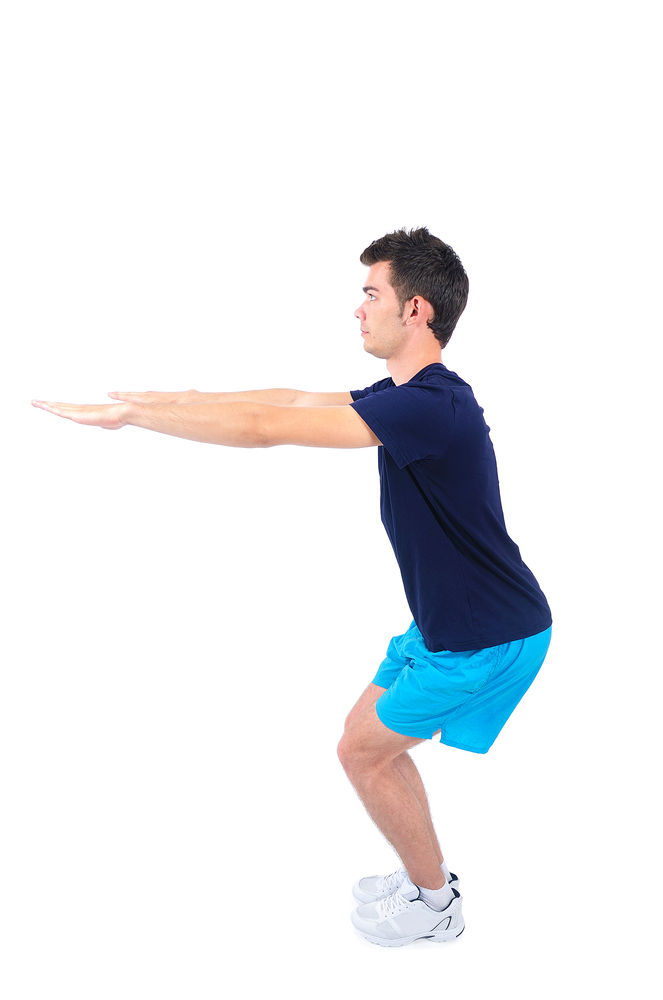
Squats:
Stand tall with your feet shoulder-width apart and lower your hips (almost like you're sitting in a chair). As you bend your knees, your thighs will be parallel with the floor, says exercise physiologist Andrea Doepker-Gavidia of Train For Life Fitness & Lifestyle Consulting in Saskatoon. Ensure your knees don’t go beyond your toes and keep your chest up and look straight ahead. Stand back up to start position and repeat.


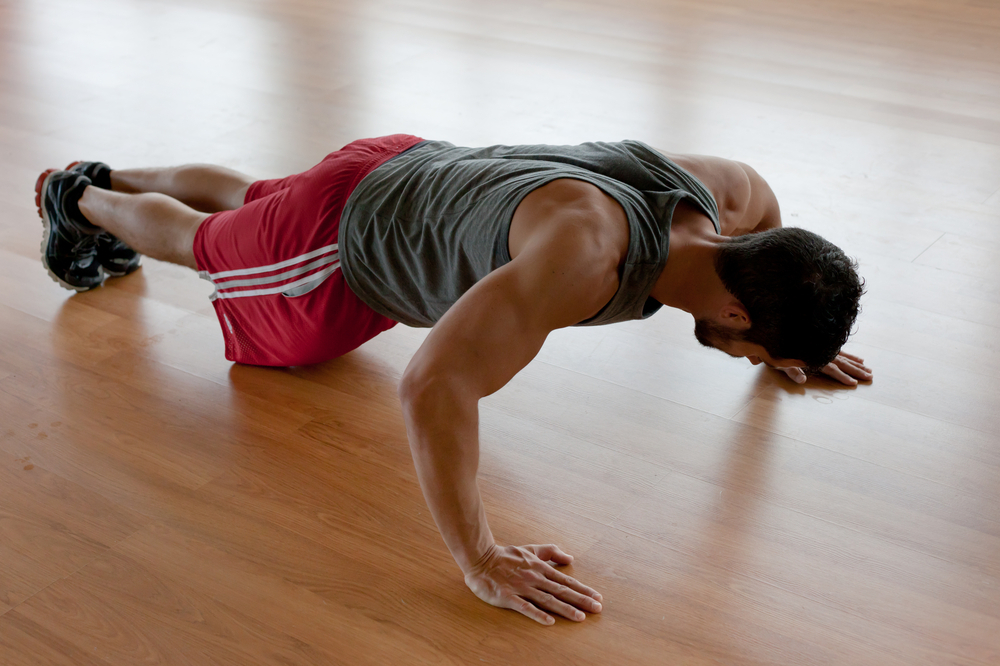
Triceps Push-Ups:
 Place your hands on the floor and keep them under your shoulders. Holding your body straight, bend your elbows close to your body. Lower your chest between your hands and push back up into the starting position. If you're having trouble completing a push-up, place your knees on the floor to make things easier. For intensity, raise your feet up onto stairs or an elevated surface to increase the difficulty.


Skaters/Leaps:
To start, get into a semi-squat position and leap sideways to land on your right foot. Immediately push off in the opposite direction and land on your left foot. Make sure you perform these skaters continuously.


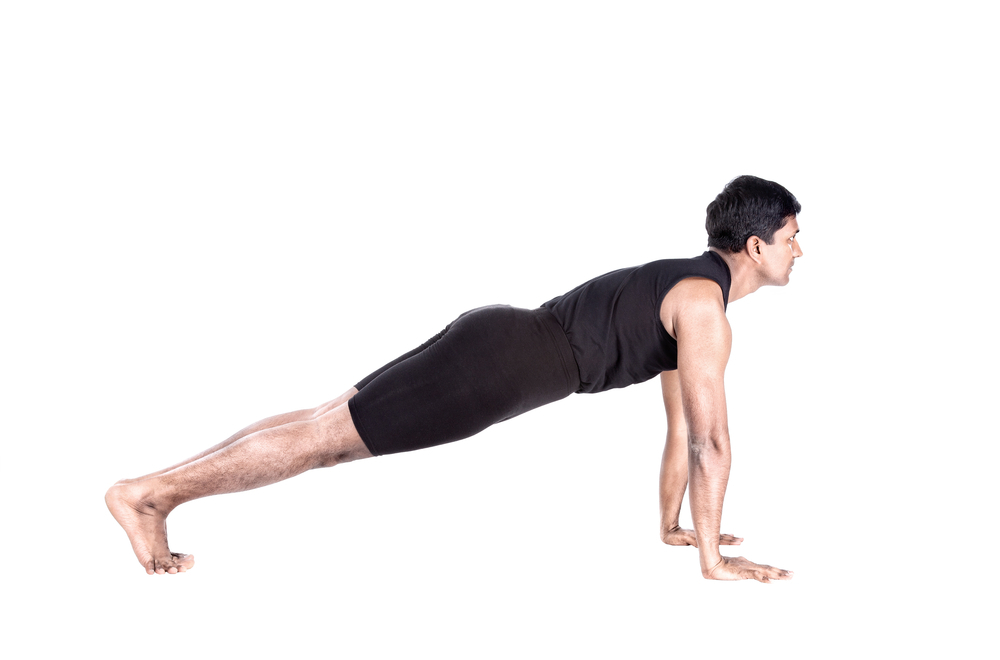
Plank Crawl:
Pace yourself for this one. We recommend giving yourself a goal of 15 to 20 crawls. Begin this move in a push-up position with your hands directly under your shoulders. Lower yourself down one arm at a time into a plank position on your forearms, while keeping your elbows directly under your shoulders. Push back up one arm at a time into your starting push-up position. Alternate the arm you lead with and maintain a straight body throughout the movement. Lower your knees to the floor to decrease the difficulty level.


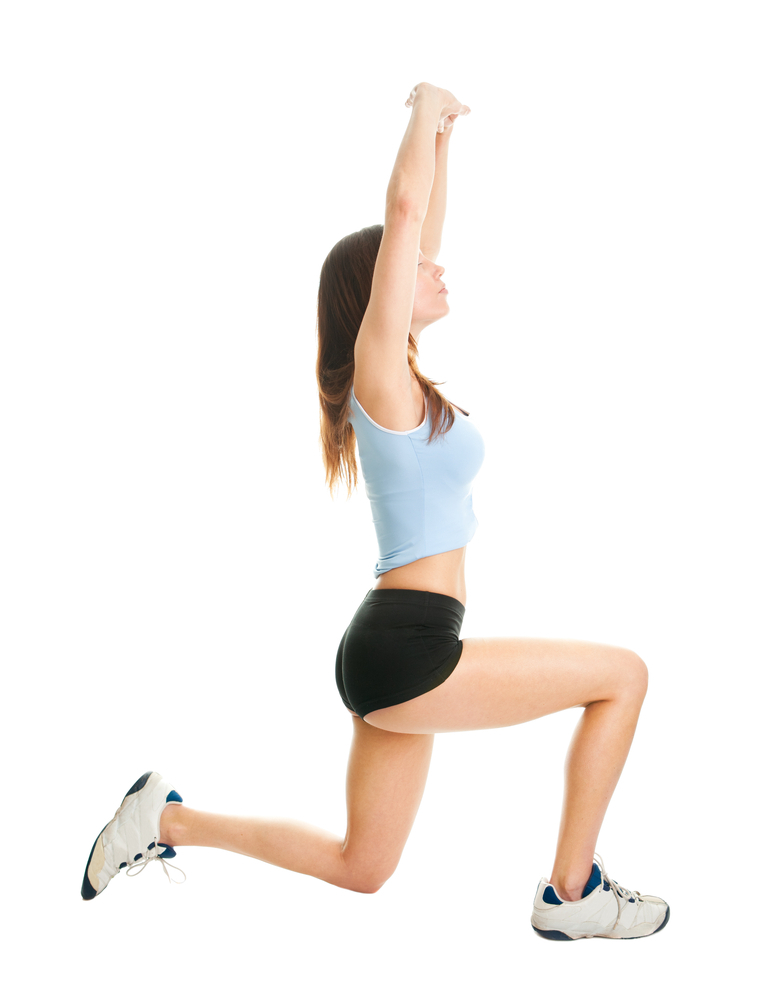
Walking Lunge:
Stand with feet shoulder-width apart and place your arms to the side. Step forward with your right foot and lower your left knee towards the floor. Your knees should bend about 90 degrees. Ensure your right knee stays over your right ankle and don't let your knee go past your toes. Step up to balance on your right foot and switch feet.


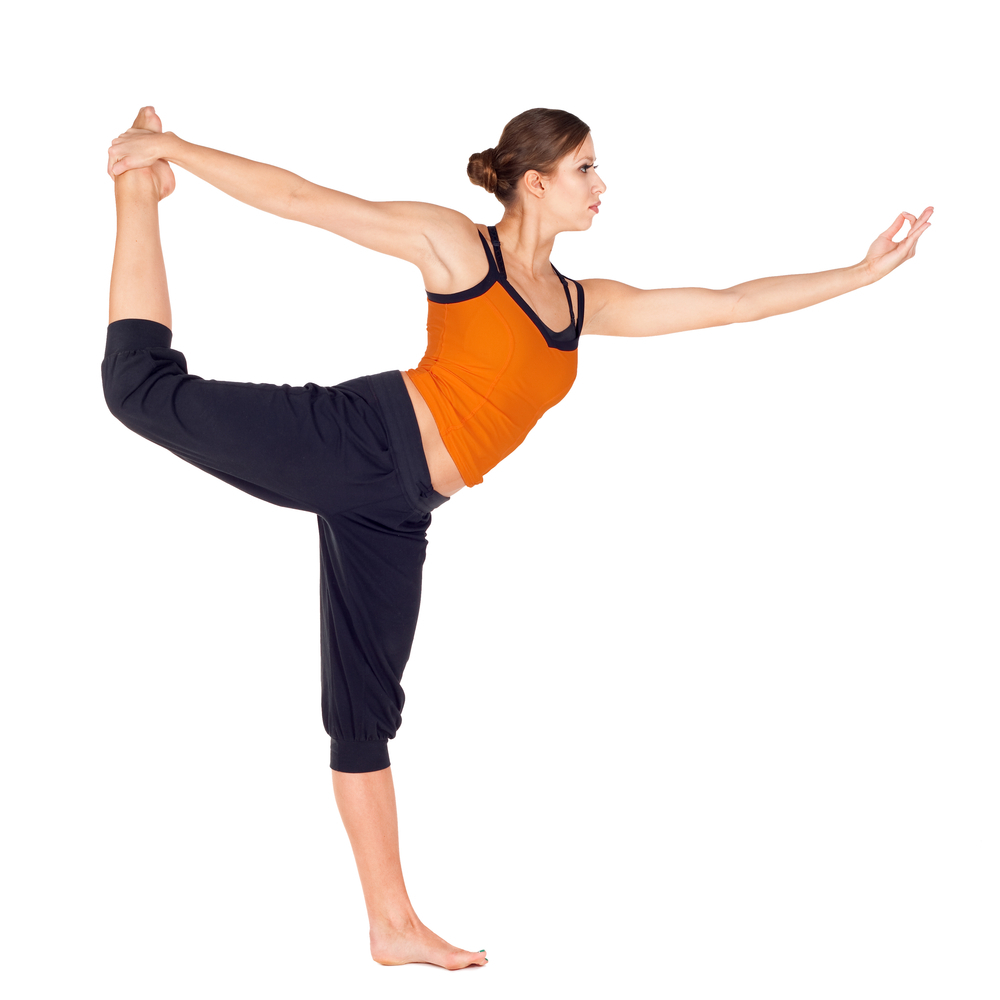
Single Leg Balance Stick:
Balance on your right foot with your left foot behind you. Lean forward, keeping a straight body position and lift your left heel towards the ceiling. Maintain a slight bend in your standing knee so you don’t lock your knee. If you're having trouble balancing, focus on something in front of you or hold your back leg for initial support (pictured here).


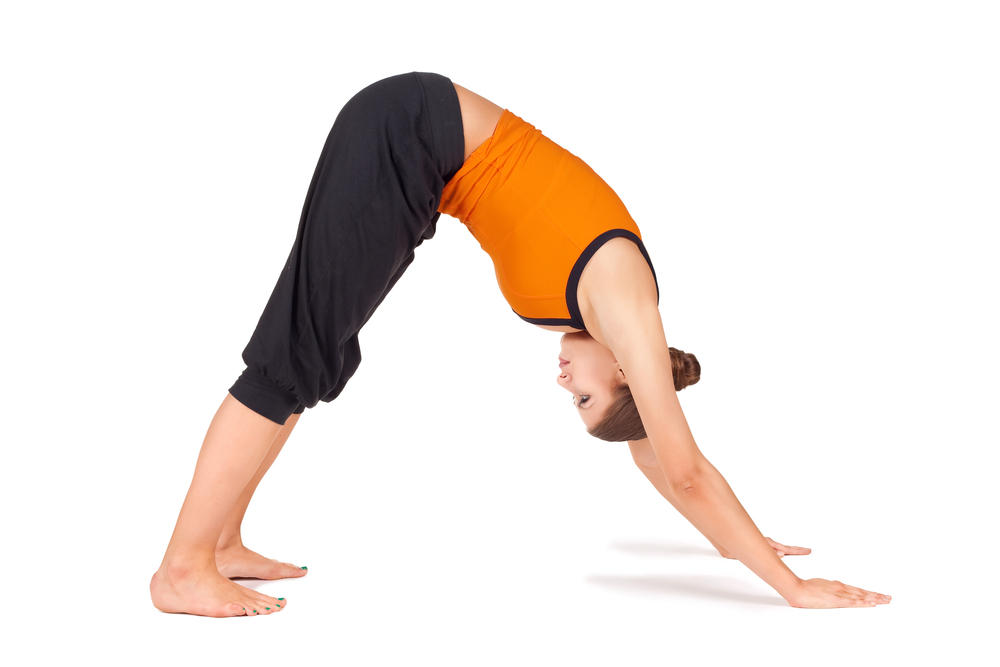
Bird Dog:
Begin on all fours (downward dog), ensuring your hands are directly under your shoulders and your knees are directly under your hips. Slowly extend your right leg behind you and reach your right arm forward into a straight line. Hold your balance without arching your back. Return to the starting position and repeat on the opposite side.


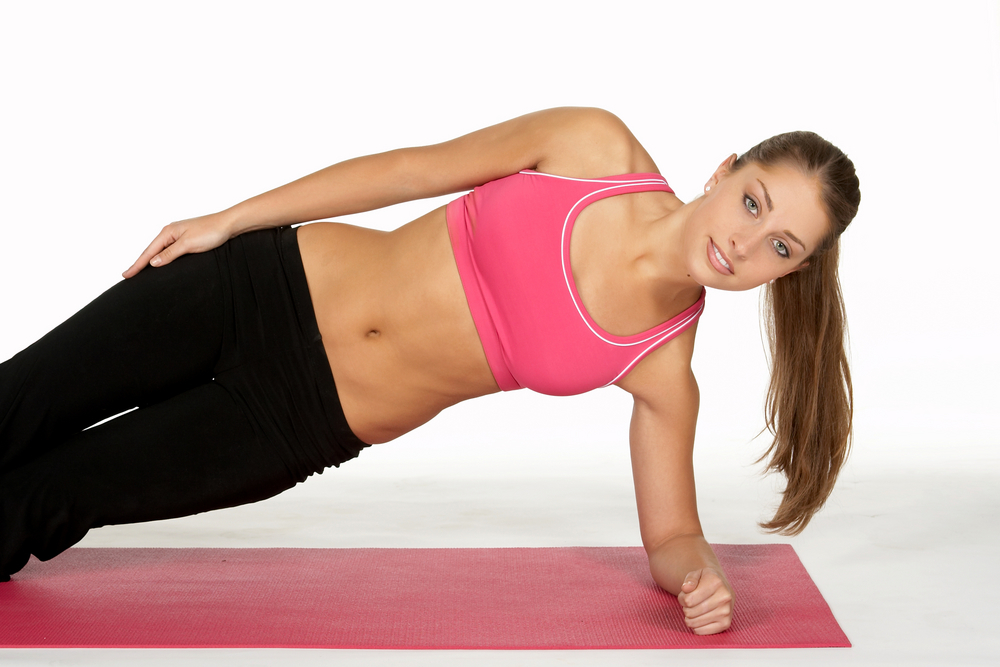
Side Plank Hip Drops:
Begin by lying on your right side with your right elbow directly lined under your shoulder. Keeping your feet on the floor, lift your hips off the floor and support your body with your forearm. Hold for three seconds and slowly lower your right hip onto the floor and repeat.


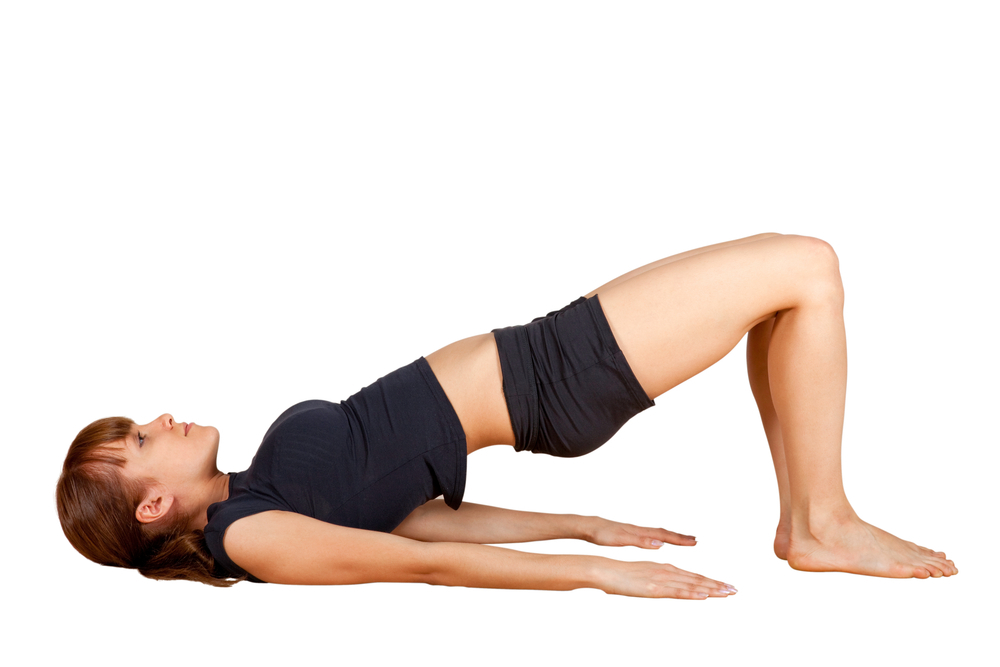
Bridge:
Lay on your back with your arms by your sides. Bend your knees while keeping your feet flat on the floor. Maintaining a straight back, raise your hips up to a straight line from your shoulders to your knees. Hold for three seconds and lower your hips slowly back to the floor and repeat.


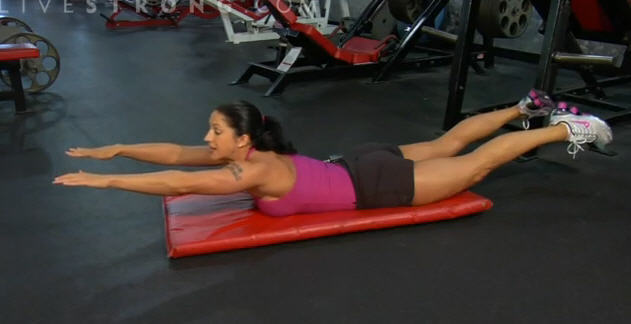
Superman Back Extension:
Lay on your stomach and reach your arms forward (like you're flying). Gently raise your legs and upper body off the floor while keeping your head straight. Pause for three seconds and repeat.

Friday, 23 May 2014

Best Weight Loss Advice

You’re ready to lose some weight. But you're tired of listening to all that stale, tried-and-true weight loss advice, like eating more vegetables, limiting portions, and exercising more.
Maybe what you need is a fresh idea or two. I asked diet experts to come up with some lesser-known diet tips that could make the most jaded dieter drop that cookie and vow, "Oh wow! I'll try that today."
Here are nine diet tips you may not have not heard yet.  Some involve different ways to eat, or adding certain foods to your diet. Others involve learning new behaviors or strategies to help you stay on track.

Weight Loss Tip No. 1: Variety Is Overrated

Who hasn't heard the advice to "just take a bite of everything" if you're at a buffet?
But as it turns out, variety doesn't deserve its good reputation, says Dawn Jackson Blatner, RD, a Chicago dietitian and author of The Flexitarian Diet.
 "We know that variety makes you eat more," she says, citing several published studies and her own experience in counseling weight loss patients.
For example, researchers in France found that study participants ate more french fries when they were offered ketchup and mayonnaise along with them. And when they were given the option of having cream or whipped cream with their brownies, they ate more than when the brownies were offered plain.
Other researchers have found that people who have been able to maintain weight loss tend to eat diets with limited variety.

Weight Loss Tip No. 2: Have Barley for Breakfast

"Barley is the new oatmeal," says Jackson Blatner.
Barley got its hunger-fighting reputation after Swedish researchers found that eating barley or rye kernels for breakfast kept blood sugar on an even keel. That's because the carbs in barley and rye kernels are "low glycemic index," meaning they raise blood sugar more slowly than some other carbohydrate foods. This helps you avoid a spike, and then a drop, in blood sugar, which can leave you feeling famished.
One caveat: "Buy hulled barely, not pearl barley," Jackson Blatner says. The Swedish researchers used minimally processed hull barley, and they can't vouch for the same effects for more processed forms, such as pearl barley.

Weight Loss Tip No. 3: Beef Up Your Lunch Salad

One of the most common mistakes dieters make is to eat a vegetable salad with little or no dressing for lunch, says Joan Salge Blake, RD, professor of nutrition at Boston University and a spokeswoman for the American Dietetic Association. "Then they are starving by mid-afternoon," she says.
A salad is a great choice, she says, if you add some protein and a little fat to help keep you feeling full longer.
Top your greens with a 3 oz piece of chicken breast, and you've added about 26 grams of protein but just 140 calories. Add about two tablespoons of light salad dressing, and your salad may be filling enough to get you through the 3 p.m. hunger slump without hitting the vending machine.

Weight Loss Tip No. 4: Stock Up on Frozen Vegetables

Sure, fresh vegetables are delicious and nutritious. But faced with the need to scrape a carrot, wash and slice a zucchini, or cut broccoli into florets, many of us say, "Too much trouble!" and reach for chips instead.
To make things easier, stock your freezer with frozen vegetables, Blake tells dieters.
"They are already clean, chopped and ready to cook in the microwave," she says. "It's like having Rachael Ray in the freezer."
An even better way to be sure you eat more vegetables: Cook the frozen veggies ahead of time. Microwave the whole bag of green beans, for instance. Then keep them in the refrigerator, ready to dump into canned soups, add to a salad, or just eat by the handful.

Weight Loss Tip No. 5: Make Yourself a Party Tray

The type of party tray Jackson Blatner is talking about is a big vegetable platter, maybe with some low-fat dip on the site -- the kind you put on the buffet for weight-conscious guests. 
But this one is just for you and any interested family members. Keep it in the fridge at eye level, encouraging you to snack healthy and avoid the higher-calorie contents of your refrigerator. 
Several studies have found that we tend to eat more when food is within easy reach. Secretaries who placed candy on their desks ate about 48% more than when the candy was 6 feet away, according to research by Brian Wansink, PhD, director of the Food and Brand Lab at Cornell University.

Weight Loss Tip No. 6: Turn Down the Thermostat

Spending time in a chilly house -- about 61 degrees Fahrenheit -- may boost the fat-burning power of the "brown fat" in your body.
Brown fat is considered "good" fat, as opposed to regular or white fat, which stores calories and tends to accumulate. Researchers believe that lean people have more of the brown type of fat, and that the amount of brown fat a person has declines with age.
Scandinavian researchers found that exposure to these chilly temperatures boosted the metabolic rate of brown fat 15-fold, helping burn more calories.
But Jackson Blatner cautions not to expect too much: "It's not going to be any kind of a miracle," she says. And beware if you're the type who eats more when you feel cold.

Weight Loss Tip No. 7: Downsize Your Dinnerware

Experts say they've seen it again and again: The larger your plate, the more you're likely to put on it. So serving your meals on smaller plates can help you eat less.
But don't throw out those dinner plates, Blake suggests. Use the smaller, lunch-size plates to serve dinner, and use the dinner plates for salads.

Weight Loss Tip No. 8: Go Out for Treats

If you're the type who overdoes it on sweets and snacks, Jackson Blatner suggests, make yourself work a little for your favorite indulgences. Don't keep them in the house, but give yourself permission to go out and get them when you really need to.
Want a brownie? You have to go to the bakery. Craving a frozen yogurt? You must find the nearest frozen yogurt shop.
"The more hassle tasty treats are, the less likely you are to eat them," says Jackson Blatner, who does this herself and finds her sweets consumption has declined without making her feel deprived.

Weight Loss Tip No. 9: Try on Your Skinny Jeans Every Friday

Find a pair of pants that is tight, but not impossible to zip, Blake suggests to her weight loss patients.  "Every Friday morning, try them on," she says.
Why Friday? Weekends are typically a tougher time to stay on diets, she says. And the Friday morning try-on will motivate you to watch your eating during the weekend.
 "If they are loose, you will say to yourself 'I am making progress, I am staying on track during the weekend,''' she says.
And if they're snug? That will provide motivation to stick to your diet so they'll fit better next week, she says.

Twitter Delicious Facebook Digg Stumbleupon Favorites More

 
Design by Free WordPress Themes | Bloggerized by Lasantha - Premium Blogger Themes | Facebook Themes